
For those without time: Older adults are more frequently targeted by online scammers. The concept of “phishing protection” can help reduce this risk: pay special attention to fake senders in emails and SMS messages, avoid clicking on links from unknown messages, and use strong passwords.
In everyday digital life, many dangers lurk — especially for people who did not grow up with computers and smartphones. Protecting against phishing is particularly important: phishing refers to attempts to steal your login details, account information or other personal data through fake emails, SMS messages or websites.
Why older adults are especially at risk
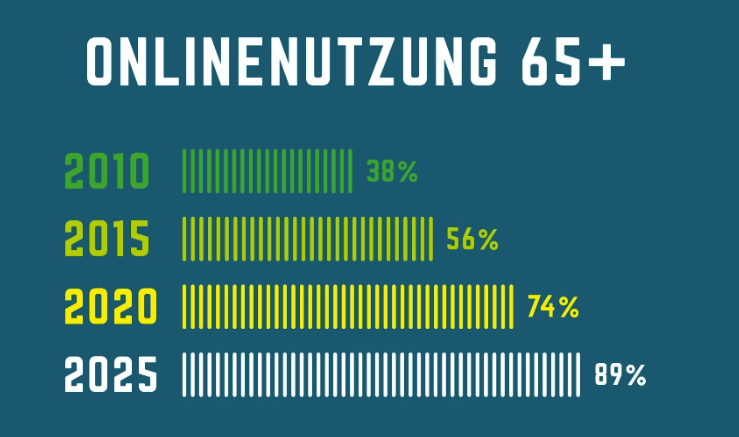
Many seniors are online today: according to a study called Digital Seniors 2025 (german), 97% of people aged 65 to 74 actively use the internet.
The study clearly shows how active seniors really are in all digital areas — despite the common misconception suggesting otherwise (e.g. ticket machines, e‑ID, etc.).
Source: Pro Senectute
At the same time, several factors make them attractive targets (not only people over 65):
- Technology has not been a constant part of their lives → less routine in recognising digital traps
- Stronger tendency to trust authority figures or unknown individuals
- Criminals use modern, professional-looking techniques, making fake emails appear very real
Typical phishing methods
Regarding phishing protection, you should be aware of these common scenarios:
- An email claiming to be from your bank or an online shop asking you to “update data” or enter login credentials. Behind the link is a fake website
- SMS or messenger messages asking you to click a link or open a file
- Phone calls or messages creating pressure (“You must react immediately or else…”) to provoke emotional responses
Practical rules for your protection
To stay protected from phishing, it’s important to apply a few simple rules in daily life:
- Check emails and messages carefully
If you receive a message supposedly from your bank — call them directly, but do not use the phone number from the email. And do not click on links in such messages. - Don’t open attachments or links from unknown senders
They may contain malware or be part of a scam.
If something unexpectedly asks you to install software — stop immediately. - Be cautious when browsing or shopping online
Look for “https://” in the address bar. Use well‑known providers and search for information if unsure. Be careful with search results — the top result is not always legitimate. Always check the URL. - Strong and unique passwords
Do not reuse the same password for multiple services. If one account is compromised, the others are at risk. - Never skip updates
Operating systems, antivirus software and browsers must always be up to date. Outdated software creates security gaps — this applies to phones, tablets, computers, and actually all internet‑connected devices (Smart TVs, smart homes, etc.). - Be sceptical instead of reacting immediately
If a message creates pressure or seems unusual — wait, ask someone you trust or look for more information.
Phishing puzzle
To raise awareness — especially among seniors — the Swiss Federal Cybersecurity Office (BACS) has created a phishing word puzzle.
How you can take responsibility together
How to support older relatives, friends, or acquaintances:
- Talk regularly about new fraud methods — knowledge reduces risk
- Be available as a contact person; checking quickly is better than uncertainty
- Define emergency steps together:
e.g. contact the bank, change passwords, disconnect the device from the internet - Encourage them to ask for help — it’s not a weakness. As my grandmother always said: prevention is better than cure
Conclusion
Protecting yourself from phishing is not complicated — it just requires awareness and simple caution in everyday life. If you handle emails, links and online requests carefully, use strong passwords and keep your devices up to date, you will have a solid layer of protection. Older adults are especially vulnerable — which is why it is important to explain these rules clearly and reduce risks together.
